Layered and Dipped Resistance Bands-A Comprehensive Guide to Manufacturing Processes
Layered and dipped resistance bands are the two primary techniques used in pull-up bands today. While they share some common features, they also have differences in their manufacturing processes, costs, and performance.
When you look at a resistance band, it’s not always easy to tell how it was made. However, understanding the commonalities and differences between these manufacturing methods can be helpful for your purchasing decision.
Today, we’re going to compare the different processes so you can better understand them.
Common Characteristics of Layered and Dipped Resistance Bands
First, let’s explore what layered and dipped resistance bands have in common:
| Material | Both types are typically made from latex providing elasticity and resistance during workouts. |
| Functionality | Both are designed for strength training, rehabilitation, and enhancing flexibility. |
| Variety of Resistance Levels | Both layered and dipped bands come in various resistance levels |
| Versatility | Both types can be used for a wide range of exercises. |
| Safety Features | Both types are designed to stretch without snapping under normal use. |
Different Manufacturing Processes of Layered and Dipped Resistance Bands
Layered Process
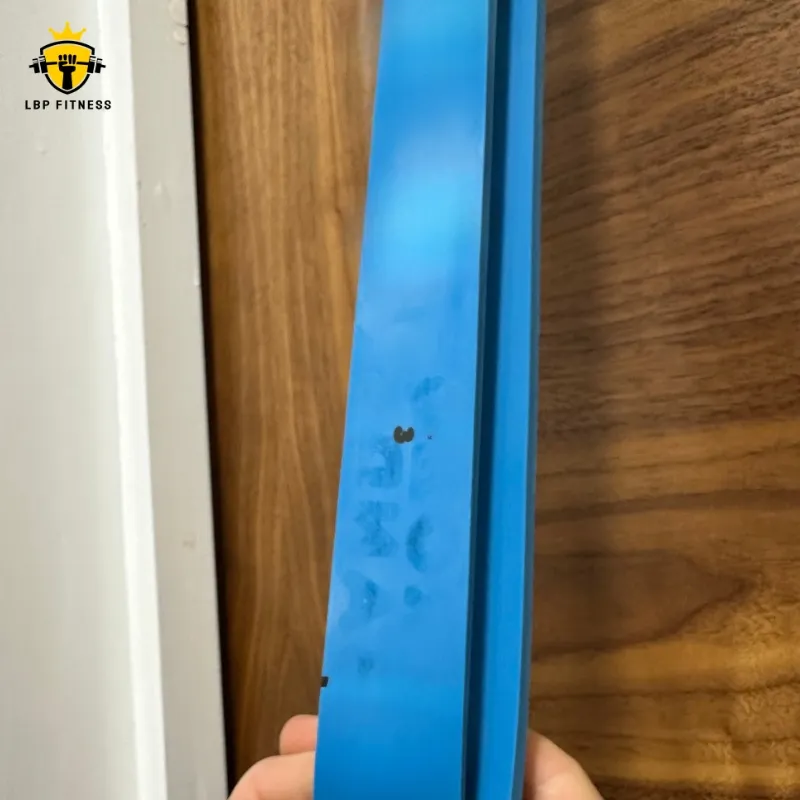
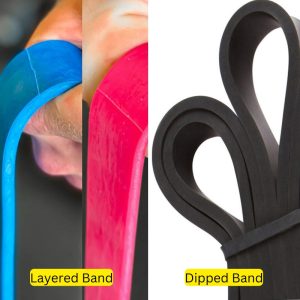
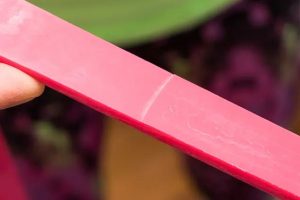
The most obvious characteristic of resistance bands made using the layered process is that they have seams on both the inside and outside.

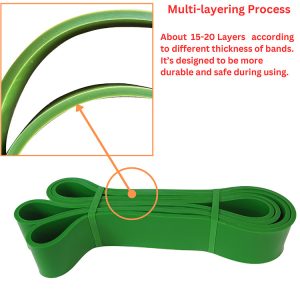
The layered manufacturing technique involves stacking multiple layers of latex, with each layer typically requiring an additional coating to enhance the latex’s performance. Each layer is added separately, allowing for precise control over thickness and strength.
Due to the multi-layer structure, layered resistance bands are less likely to break during use. Even if the outer layer sustains minor tears, the inner layers remain intact, extending the band’s lifespan. Additionally, this structure provides consistent resistance levels during stretching, making workouts more effective and suitable for various intensities.
Dipping Process
Dipped process is also known as “multi-layer” or “continuous dipping,” this method involves immersing a mold into liquid latex and forming the band through repeated dipping and drying cycles.
Typically, the entire composition of the band is more uniformly coated. This multi-dipping process can create a resistance band with an even thickness, often requiring dozens of dips to achieve the desired strength and durability.
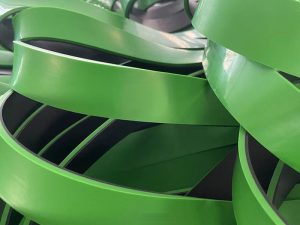
Dipped bands are generally more durable than single-layer extruded bands, able to withstand greater tension without breaking.
Production Steps of 2 Main Processes
Layered Process
- Starting with a core material(usually a thin rubber or fabric strip)
- Apply a layer of liquid latex or rubber compound
- Allowed partially drying
- Apply multiple layers with chemical coatings between each layer
- Cure the elastic band using heat treatment
- Apply powder or non-stick coating to keep the surface dry
Dipping Process
- Prepare a core or mold according to the desired band shape
- Dip the mold into a vat of liquid latex
- Remove excess material and allow dripping
- Dry in a temperature-controlled environment
- Repeat dipping and drying multiple times to increase thickness
- Cure the product through heating
- Remove from the mold and apply finishing treatments

Durability and Lifespan of Layered and Dipped Resistance Bands
Layered Process
The layered process can provide higher durability due to the use of different materials. Each layer can reinforce the others, making it more tear-resistant. However, if the bonding is inadequate, weak points may occur at the junctions of the layers. Typically, higher maximum resistance levels can be achieved.
Dipping Process
Generally, dipped products exhibit very consistent wear characteristics, with fewer weak points or separation areas. Due to the uniform composition, surface wear may occur more easily. However, they typically possess good elasticity and recovery capabilities.

Both processes can produce durable products, but the layered process usually offers more customization for specific durability needs, while the dipping process tends to provide higher overall consistency in the final products.
Strength and Elasticity of Layered and Dipped Resistance Bands
Layered Process
The layered process allows for precise control over strength by adjusting the number of layers and materials used. Different resistance bands can be created along the length. By incorporating high-elasticity layers, better rebound effects can be achieved, and reinforcement layers can enhance maximum strength.
Dipping Process
Dipped bands generally provide uniform strength and elasticity throughout. The strength is primarily controlled by the number of dips and the composition of the solution. This often results in smoother stretching and contracting due to the material’s consistency, leading to more predictable force curves.
Cost Differences of Layered and Dipped Resistance Bands
Layered Process
The layered process is generally more labor-intensive, which can increase production costs. It may require more advanced equipment for multi-layer application and curing. Inner layers can use cheaper materials, optimizing costs, but if specialized compounds are used for different layers, material costs may increase.
Dipping Process
For mass production, the dipping process is typically more cost-effective. It requires significant initial investments in dipping equipment and curing ovens. However, automated processes reduce labor costs over time. The soaking required during the dipping process necessitates a certain amount of material, which can affect minimum order quantities.
Quality Control on Layered and Dipped Resistance Bands
Layered Process
Each layer’s application and curing must be carefully monitored, allowing for quality checks between layers. Specialized testing may be required to ensure correct adhesion between layers. If issues arise, formulations or processes can be adjusted for individual layers.
Dipping Process
Quality control focuses on the consistency of the dipping solution and the precise control of dipping cycles. Automated systems are typically used to ensure uniform coating thickness. Final product testing usually includes elongation rates, strength, surface checks, and durability assessments.
Customization Options
Layered Process
The layered process used to allow for high customization based on resistance levels and better durability.
Dipping Process
The dipping process is customized mainly by adjusting the dipping solution and the counts of cycles.
The color is usually uniform throughout the band, but the inner and outer layers can be made different colors or a textured surface can be created using a mold with texture.
While length variations need to be realized by mold, there is abundant room for customization of width and thickness.

Pros and Cons of Layered and Dipped Resistance Bands
Layered Process
Advantages
– Highly customizable
– Potential for higher strength and unique performance characteristics
– Optimized material usage can improve cost-effectiveness
Disadvantages
– More complex manufacturing processes
– Potential delamination if bonding is inadequate
– Production costs may be higher
– Over time, bands may begin to peel, which is normal and does not affect the integrity or use of the band (if minor). However, if delamination worsens, it may indicate aging, and replacement may be necessary.
Dipping Process
Advantages
– Stable product quality
– Typically more cost-effective for mass production
– Simpler processes with fewer variables
Disadvantages
– High initial equipment investment
– Color layers are limited
– While dipped bands also have a multi-layer structure, the connections between layers differ from the layered structure, resulting in slightly lower durability. However, advancements in technology and formulations are narrowing the gap between the two processes.
– Length variations in dipped bands depend on molds, but as mold prices decrease and efficiency improves, the differences between the two processes continue to diminish.
Conclusion
Understanding the manufacturing processes of resistance bands—layered and dipped—provides valuable insights into their quality, durability, and performance characteristics. Each method has its unique advantages and disadvantages that cater to different needs and preferences.
The choice between layered and dipped bands may depend on specific user needs, budget considerations, and desired performance characteristics.
However, it’s important to note that like most usable goods, all resistance bands have a limited lifespan. Regular inspection and proper care can help extend their life, but eventually, all bands will need replacement to ensure safe and effective workouts.
More to Read
Comparing dipping and Extruded Resistance Bands: A Deep Dive – Sourced from LBP Fitness