How Latex Tubing and Band are Manufactured

Knowing how rubber latex tubing and band are manufactured helps in selecting the appropriate type for specific needs.
Natural rubber latex is derived from the sap of rubber trees and is used in a wide range of industries. It is a versatile material that is used to make products such as rubber latex tubing and rubber latex bands. Rubber latex tubing is used in medical devices, sports equipment, and industrial processes, while rubber latex bands are used in packaging, fitness, and everyday household tasks.
Background Information on Natural Rubber Latex
Origin and Sources
– Natural rubber trees
Natural rubber latex comes from the sap of rubber trees. The most common species of rubber tree is Hevea brasiliensis, which is found in tropical climates. Countries such as Thailand, Malaysia and Indonesia are major producers of natural rubber. Rubber trees require a warm and humid environment in order to produce high-quality latex.
– Harvesting latex
Latex sap is extracted from rubber trees through a process called tapping. Tappers make cuts in the bark of the tree to collect the milky fluid. The latex sap is collected in containers that are attached to the tree. The collected latex sap is then filtered and packaged in drums for transportation to processing facilities.
Properties and Characteristics
– Elasticity
Natural rubber latex has excellent elasticity. It can be stretched significantly and will return to its original shape without any deformation. This makes natural rubber latex ideal for products that require flexibility and resilience.
– Durability
Natural rubber latex is very durable. It can withstand a variety of physical stresses, including abrasion and tearing. This durability ensures that products made from natural rubber latex will have a long lifespan, even in demanding applications such as medical devices and industrial equipment.
– Biodegradability
Natural rubber latex is biodegradable. It will break down naturally over time, which reduces its impact on the environment. This characteristic makes natural rubber latex a sustainable and renewable resource. Researchers are also exploring its potential use in biomedical applications, such as tissue repair and drug delivery systems.
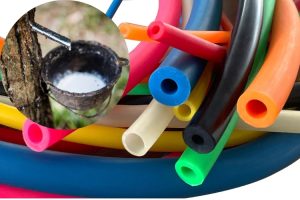
Manufacturing Process of Natural Rubber Latex Tubing
Raw Material Preparation
– Collection of latex
Professional tappers harvest latex from rubber trees. follow the Harvesting latex process.
– Purification and concentration
At the processing facility, technicians purify the latex further. The latex undergoes a series of filtration steps to ensure high purity. Concentration follows, where water content is reduced to increase latex density. This concentrated latex serves as the primary raw material for rubber latex tubing production.
Tubing Formation
– Extrusion process
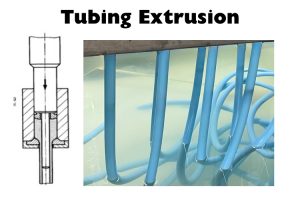
The extrusion process shapes the purified latex into tubing. Technicians feed the concentrated latex into an extrusion apparatus. The apparatus forces the latex through a die, forming continuous tubes. The extrusion process allows for precise control over tubing dimensions. Different apparatus configurations can produce extruded tubing in various diameters, like surgical tubing.
– Dipping process
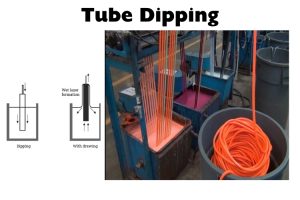
The dipping process is another method used to form latex tubing, particularly for thin-walled tubing. First the preparation of the Former, typically a long mandrel shaped like the desired tubing, which can be made of metal or other materials and is often cleaned and treated to ensure the latex adheres properly. Then the former is dipped into a bath of liquid latex. Upon withdrawal, a thin layer of latex adheres to the surface of the former. The latex-coated former is then dried and cured. This process may be repeated several times to build up the desired wall thickness of the tubing, even 6-9mm speargun rubber tubing.
– Vulcanization
Vulcanization enhances the durability and elasticity of the tubing. The extruded or dipped tubes undergo heating with sulfur, initiating cross-linking of rubber molecules. This chemical reaction transforms the latex into a more resilient material. Vulcanized rubber latex tubing exhibits superior strength and flexibility, suitable for demanding applications.
Quality Control of Rubber Tubing
– Testing for elasticity and strength
Quality control ensures that the tubing meets stringent standards. Technicians conduct tensile and fatigue tests to measure the elasticity and tensile strength of the tubing. These tests verify that the tubing can withstand stretching and physical stress without deformation.
– Ensuring uniformity and consistency
Uniformity and consistency are critical for high-quality rubber latex tubing. Technicians inspect the tubing for any defects or irregularities. Advanced machinery measures the tubing dimensions to ensure uniform thickness and diameter. Consistent quality guarantees reliable performance in medical, industrial, and other applications.
Manufacturing Process of Rubber Latex Bands
Raw Material Preparation
– Collection of latex and Purification and concentration
Same process as rubber latex tubing.
Band Formation
– Dipping process
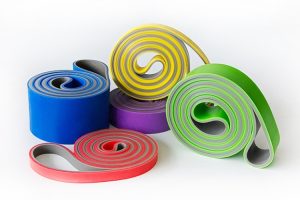
Similar to dipping process of tubing, The band dipping process shapes the purified latex into bands. Technicians dip formers into the concentrated latex. The latex adheres to the formers, forming a uniform layer. Repeated dipping can achieve the desired thickness. The formers are then removed, leaving behind continuous rubber latex bands.

– Cutting and shaping
Cutting and shaping follow the dipping process. Machines cut the continuous bands into specific lengths. Shaping tools refine the edges to ensure smoothness. This step prepares the bands for various applications, including fitness and packaging.
Quality Control about Rubber Band
– Testing for elasticity and strength
Quality control ensures that the bands meet stringent standards. Technicians conduct tests to measure the elasticity and tensile strength of the bands. These tests verify that the bands can withstand stretching and physical stress without deformation.
– Ensuring uniformity and consistency
Uniformity and consistency are critical for high-quality rubber latex bands. Technicians inspect the bands for any defects or irregularities. Advanced machinery measures the band dimensions to ensure uniform thickness and width. Consistent quality guarantees reliable performance in various applications.
Future Trends and Developments of Rubber Tubing and Band
Innovations in Material Science
– Sustainable alternatives
Researchers are exploring sustainable alternatives to traditional rubber latex. Yulex, a natural rubber tapped from deforestation-free tree plantations, represents a promising development. This material offers an eco-friendly option for various applications. Scientists are also investigating the use of bio-based polymers to enhance the sustainability of rubber latex products.
– Enhanced properties
Advancements in material science have led to improved properties of natural rubber latex. Studies have demonstrated exceptional mechanical properties of Natural Rubber Latex (NRL) derived from Hevea brasiliensis. Blending NRL with PEDOT:PSS has shown potential for bioelectronic applications. Other research focuses on the effect of lipids on the stability and tensile properties of rubber latex films. These innovations aim to enhance the performance and durability of rubber latex tubing and bands.
Market Trends of Rubber Tubing and Band
– Growing demand
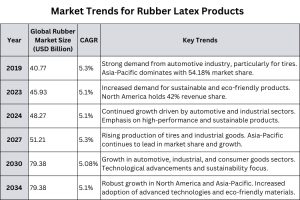
The demand for rubber latex products continues to grow. Industries such as healthcare, fitness, and packaging rely heavily on rubber latex tubing and bands. The increasing need for medical devices and fitness equipment drives this demand. Additionally, the packaging industry benefits from the versatility and strength of rubber latex bands.
– Emerging applications of Rubber Tubing and Band Products
Emerging applications for rubber latex products are expanding their market reach. Researchers are exploring the use of rubber latex in biomedical applications, including tissue repair and drug delivery systems. The unique properties of rubber latex make it suitable for innovative uses in various fields. As technology advances, new applications for rubber latex tubing and bands will continue to emerge.
Natural rubber latex tubing and rubber latex bands play vital roles in various industries. The manufacturing processes involve meticulous steps, from raw material preparation to quality control. Future developments in material science and market trends promise exciting advancements. Innovations like sustainable alternatives and enhanced properties will shape the future of rubber latex products.
LBP’s Rubber Tubing and Band Manufacturing
Over the years, we’ve had the privilege of being a leading manufacturer of latex products, specializing in the production and distribution of latex tubing and latex bands. By collaborating with sports brands, wholesalers, retailers, and professionals around the globe, we’ve established ourselves as a trusted partner in the latex tubing and band industry, known for our quality and service.
Backed by our strong production capabilities, we can quickly customize the natural latex products you require. Whether it’s tubes, bands, or more complex assembled and stitched items, we have the expertise to provide you with high-quality solutions and a fast turnaround. Our commitment to excellence allows us to meet the diverse needs of customers across various industries.